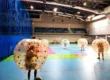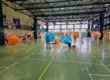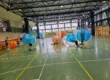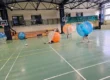
Class bonding turns people who happened to land in the same classroom into a team that knows each other and can work together. The best class bonding activities combine two things: short games in form time (godzina wychowawcza, a Polish class’s lesson with its form tutor) and one shared outing that gives the class a common story – such as bubble football for grade 4 and up. Below are practical ideas, a sample budget and a paperwork list.
We’ve run bumper ball games in Krakow for groups aged 10+ for years, and as organisers we know one thing: what bonds a class is a shared experience, not another talk about “respecting each other”. This guide is for form tutors of grades 4–8 (roughly ages 10–15 in the Polish system) and secondary school classes.
Why bother with class bonding?
A class where people know each other works better in groups, settles conflicts faster and gets more involved in joint projects. For the form tutor, it’s also a chance to see students away from their desks – who naturally takes charge, who needs encouragement and who has a knack for defusing tension. Bonding matters most when:
- the class is new – in Polish schools, grade 4 often brings a new form tutor, and the first year of liceum (upper secondary school) mixes students from different schools,
- a new student joins mid-year,
- the class is clearly split into cliques or conflicts are building,
- a longer trip is coming up and you want everyone at ease.
Class bonding activities for form time
You don’t need a budget or equipment – one lesson, a few sheets of paper and some space with the desks pushed back will do. These games work in primary and secondary school alike if you pitch the questions to the age group.
- “Find someone who…” bingo – everyone gets a card with squares such as “has a dog”, “went to the mountains in the summer holidays” or “plays an instrument” and hunts for classmates who match. The first to fill a row wins, and along the way everyone talks to several people.
- Two truths and a lie – a student says three things about themselves and the class guesses which is made up. Simple, quick and surprisingly revealing.
- Line up without words – the whole class lines up by date of birth or shoe size, communicating only by gestures.
- What do we have in common? – pairs or fours have five minutes to find five things they share – other than going to the same school.
- Spaghetti tower – teams build the tallest tower they can from dry spaghetti, tape and string, with a marshmallow on top. You’ll see at once who plans, who gets stuck in and who motivates.
- Human knot – groups of several students cross hands and try to untangle themselves without letting go. With older classes, check first that everyone is OK with the contact.
- Class contract – together, the class writes down the rules it wants in its classroom, and everyone signs. Rules the students came up with are easier to refer back to than ones imposed from above.
For more ideas – for trips and camps too – see our list of 15 team building games for teenagers. Mix active games with desk-based ones so everyone gets a chance to shine.
Bonding outings – ideas beyond the school walls
Form time opens the topic, but a shared outing gives the class an experience they’ll talk about for years. Here are ideas for different budgets – from free to fully organised.
Bubble football for grade 4 and up
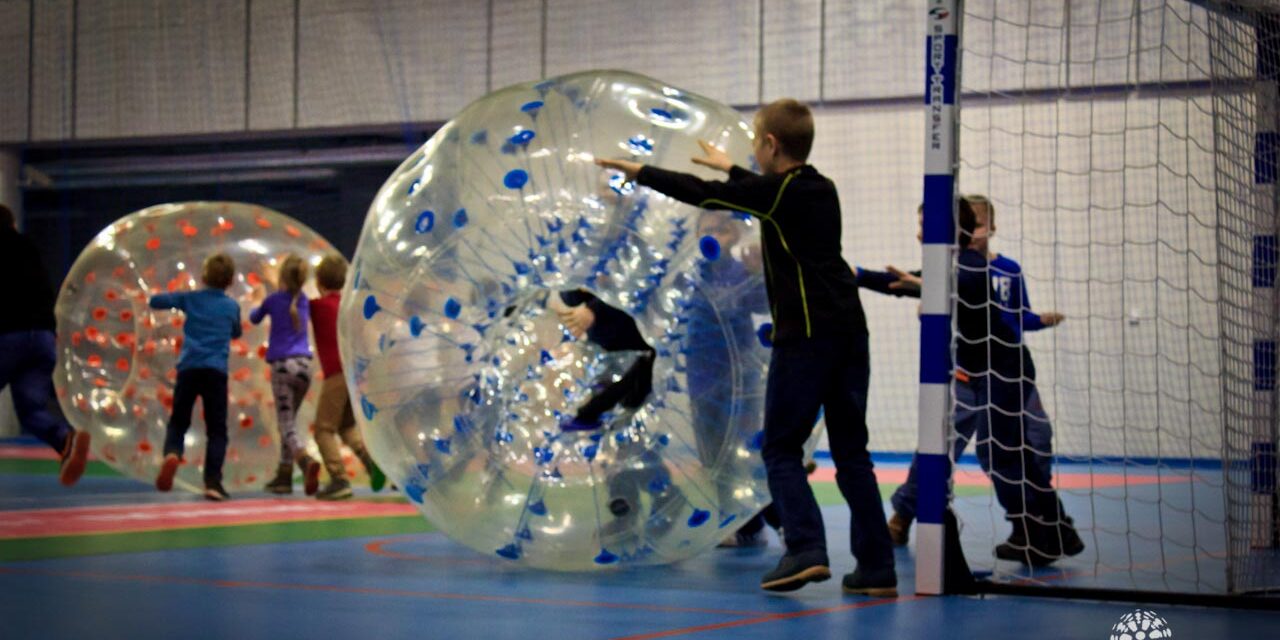
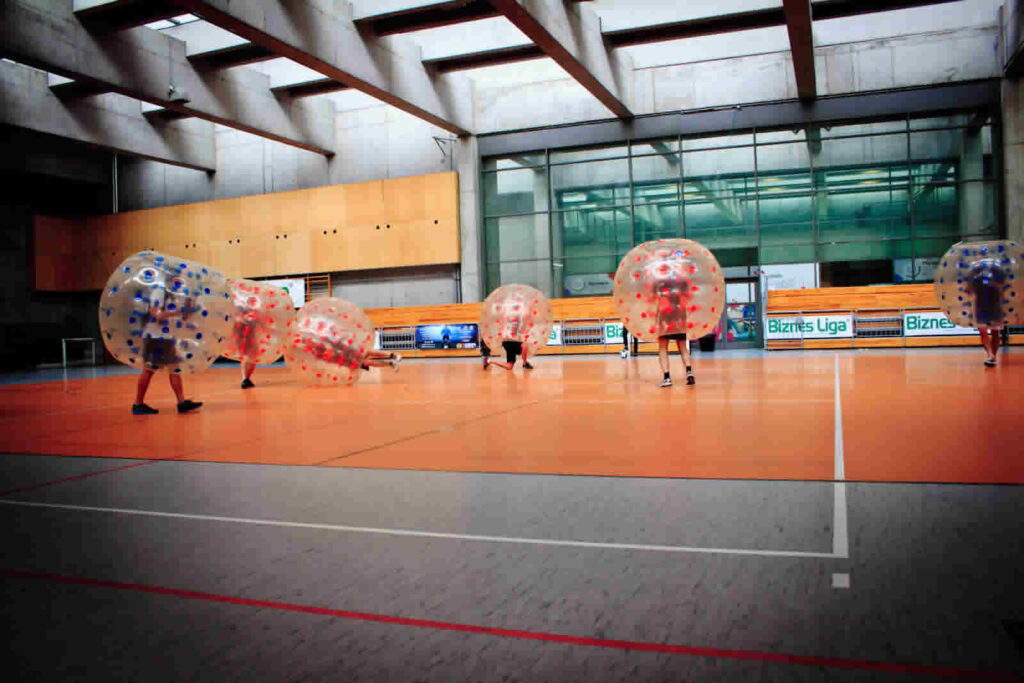
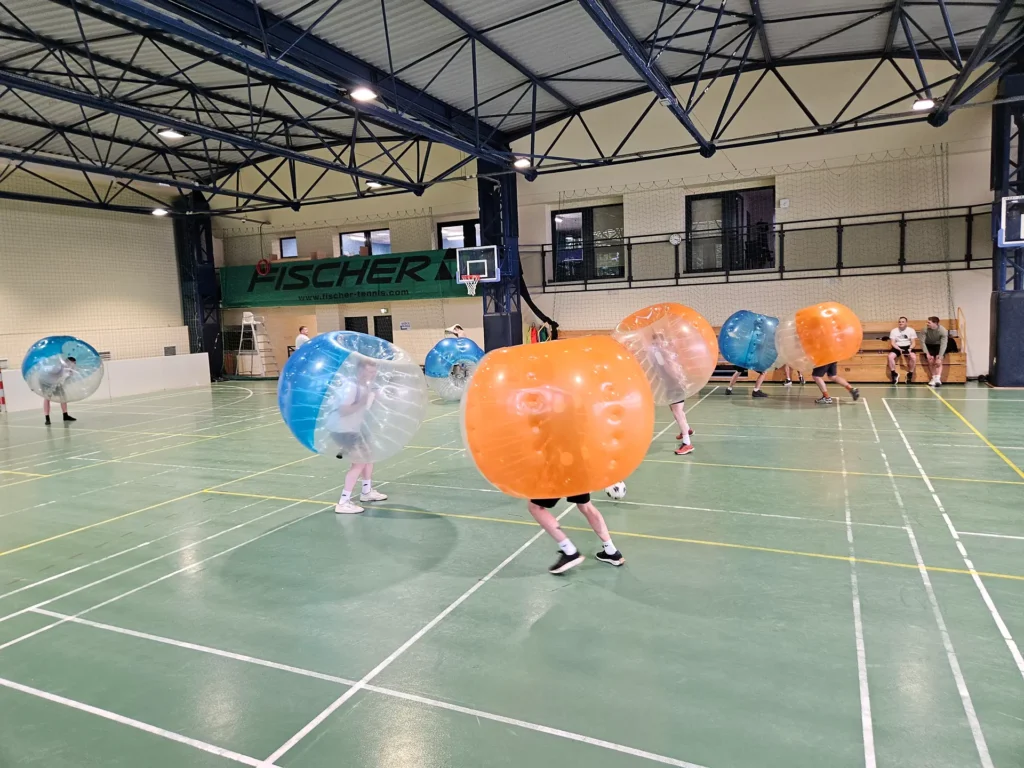
Bumper ball, or bubble football, is football played in bubbles that cover each player from head to knees – legs stay outside, so you can run, shoot and bump into opponents. It’s for children aged 10 and over, and no football skills are needed: the biggest laughs come while everyone is still learning to move in a bubble.
There are 10–12 players on the pitch at once, so we split the class into teams that take turns and play a mini tournament with games such as Bubble Sumo, Bulldog, Last Man Standing and rugby. The referee picks games to suit the group and enforces the safety rules, and before the game there’s a briefing on putting the bubbles on. We can come to your school gym or you can play in a hall – details on our bubble football for school classes page.
A city game around the neighbourhood
Pick 6–8 checkpoints near the school or in central Krakow – in Kazimierz, say, or along the Planty, the park ring around the Old Town – and set a task for each: a riddle, a group photo or a question about the place’s history. Teams of 4–5 set off with a task sheet, and the first team back with every task done wins. The cost? Printouts and maybe a few small prizes.
Escape room, trampoline park, laser tag, bowling
Commercial venues are convenient because the programme is ready-made. With a class of 25–30, you’ll usually need groups that take turns. Before you book, check age limits and requirements for accompanying adults.
Campfire, picnic or bike ride
In spring and early autumn, the cheapest idea is often the best: a campfire with roasted sausages and games in a clearing. A bike ride suits older classes, provided everyone has a bike and can ride in a group.
Class bonding in bubbles
We’ll bring the bubbles to your school gym or book a hall. A mini tournament for the whole class, with an invoice for the school.
Get a quotePrefer to call? +48 509 196 229 – Sylwester. We reply within 24 hours.
Class bonding in secondary school – what works with older students?
In the first year of liceum, students from different schools – and often different towns – come together, so bonding is needed from week one. But secondary school students don’t want “kids’ games” – challenges, competition and something worth showing off in photos work better.
- A bubble football tournament with a final – mixed teams, so the usual cliques don’t always play together.
- An escape room with a leaderboard – several rooms at once and one table of times.
- A city game around Krakow – with photo tasks and questions answerable only on site.
- Cooking together or a campfire – less competition, more conversation.
Give the class a choice: the class council can pick one of two or three options, while you handle the budget and paperwork. Some older students may be 18 already, but one thing doesn’t change – we only play sober.
How much does a class bonding outing cost?
Class bonding doesn’t have to be expensive. Form-time games and a city game cost only the printouts – budget for one bigger expense per semester.
Bubble football prices are per person: the package without a hall (e.g. in your school gym) is €17, with a hall €22 and with a VIP hall €28. Example: a class of 26 on the package without a hall pays 26 × €17 = €442 for the standard hour. Photo coverage (€34, 20–25 photos plus a group photo) adds just over €1.30 per student, and a game host and referee with a speaker for music costs €34 an hour.
The money can come from a parents’ contribution, the class fund or – if your school does this – the parents’ council fund. We issue VAT invoices to companies and institutions, so settling up with the school is straightforward, and a whole class playing longer gets an individual quote.
A plan for the semester – September to December
Bonding works best when it isn’t a one-off. Here’s a plan for a new class spread over several months:
| When | What | Cost |
|---|---|---|
| First weeks of September | “Find someone who…” bingo and a class contract | free |
| September–October | a city game near the school | printouts |
| October | a bonding outing, e.g. a bubble football tournament | from €17 per person |
| November | spaghetti tower and “What do we have in common?” | a few packets of spaghetti |
| December | class wigilia (pre-Christmas party) with group tasks | class whip-round |
Parental consent and paperwork
Before booking, check your school’s trip rules and agree the outing with the head. You’ll usually need written parental consent and a list of participants, but the details – including the number of accompanying adults – are set by the school.
In the note to parents, say what the activity is, where it is and how long it lasts, what to wear (PE kit and trainers) and the cost. For bubble football, also check the requirements: players must be 10 or over, the standard balls (1.5 m) are for players from about 150 cm tall, and the maximum player weight is 100 kg.
If you play in your own school gym, there’s no transport to arrange – we bring the balls to you, and delivery is free within 15 km of Krakow city centre (€0.23/km beyond that). We travel all over Poland, so the game can also be held at a school outside Krakow.
Form tutor’s checklist
- Set the goal: helping a new class get to know each other, defusing a conflict or an end-of-semester reward.
- Ask the students’ views and offer two or three options.
- Check the school’s trip regulations and agree the date with the head.
- Collect parental consent and any health information the supervising adults should know.
- Book the activity – we reply to enquiries within 24 hours, or you can call +48 509 196 229 (Sylwester).
- Pass on the school’s details for the invoice.
- The day before, remind everyone about kit, water and the meeting time.
- After the outing, talk in form time about what worked and what’s worth repeating.
If the outing is part of a bigger trip, read our article on activities for teenagers in Krakow on a school trip. It includes museum lessons and a day plan with a game.
Plan a class bonding outing
Tell us the class size and age – we’ll reply within 24 hours with a suggested date and game format.
Send an enquiryPrefer to call? +48 509 196 229 – Sylwester. We reply within 24 hours.
Frequently asked questions
From what grade can a class play bubble football?
From grade 4 in Polish schools, because players must be 10 or older; in other school systems, go by age. In grade 4, pick a date in the second half of the school year, when almost the whole class has turned 10.
How do you get secondary school students on board with class bonding?
Give them a choice and a bit of competition. A vote on two or three options and a tournament with a final usually work better than games imposed by the form tutor.
How long does a bubble football game for a whole class take?
An hour as standard, with about 45 minutes of actual play; with 25–30 students, it’s worth extending it by 30 minutes. Add time for getting changed and any travel.
What should you do with a student who can’t do PE?
Give them a different role: supporter, team photographer or scorekeeper. That way they’re still part of the shared outing.