Unusual sports in Poland that you can try with your group in a single day include bubble football (football in inflatable balls), archery tag, disc golf, footgolf, ringo, kin-ball and tchoukball – plus curling in winter. None of them needs a licence or months of training: all you need is a group of friends, an hour or two and someone to explain the rules. Below we cover what each involves, where to find it and who’ll enjoy it.
Bubble football gets the most space – no secret, it’s our speciality. We’ve been running games in Krakow day in, day out for years, so we know first-hand what works for a group and what to skip.
Which unusual sports in Poland work for a day out with your group?
Our list includes sports that meet three conditions: the rules take a few minutes to explain, the organiser provides the kit or it’s easy to get, and the whole group can play – including people whose last run was in school PE. We’ve left out sports that need a course, a licence or your own horse. We’ve split our picks into two groups: those you book with an organiser and those you can organise yourselves.
With an organiser: just turn up and play
Bubble football – a match in inflatable balls
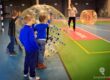
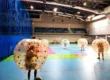
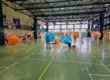
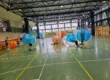
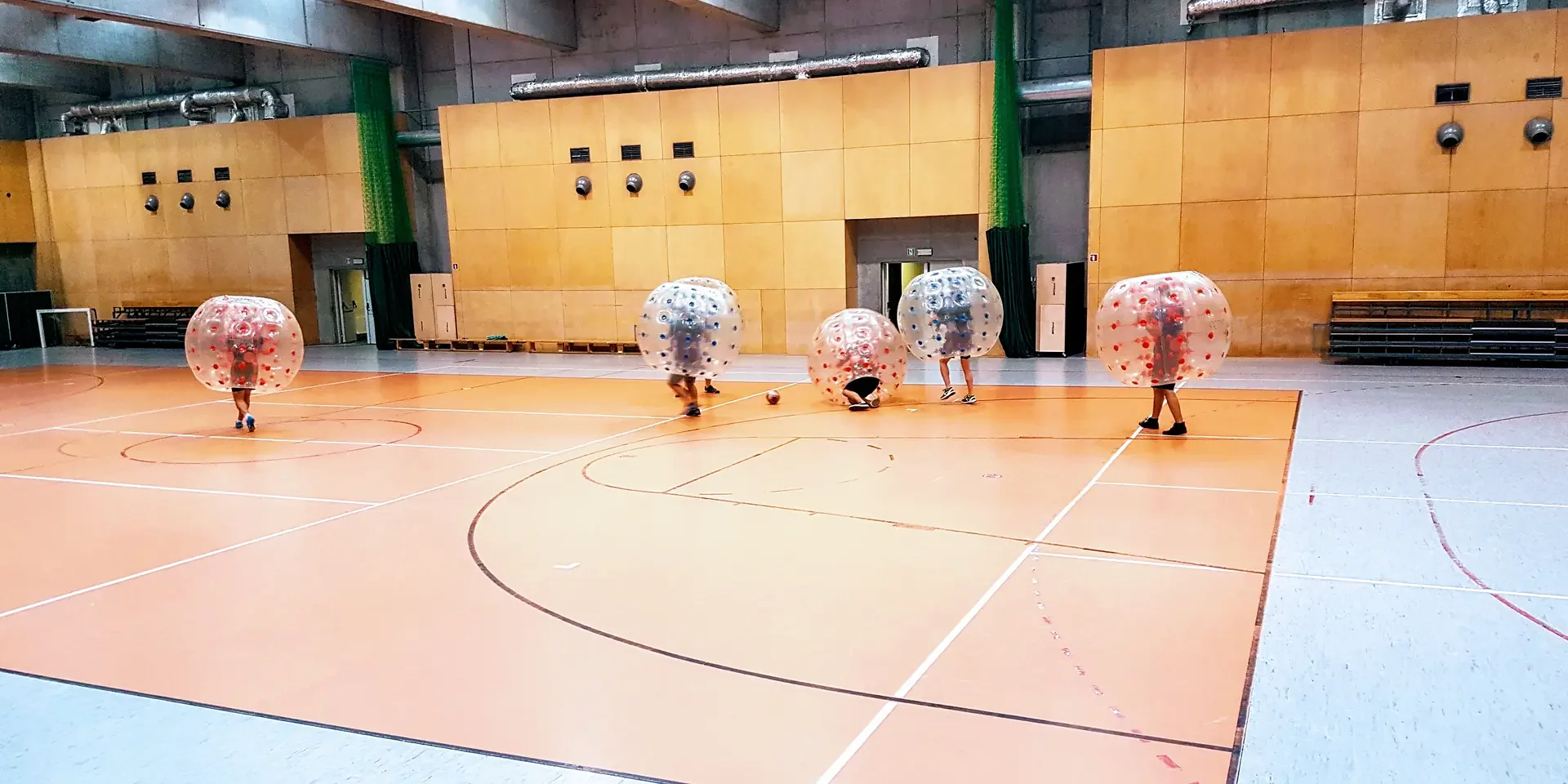
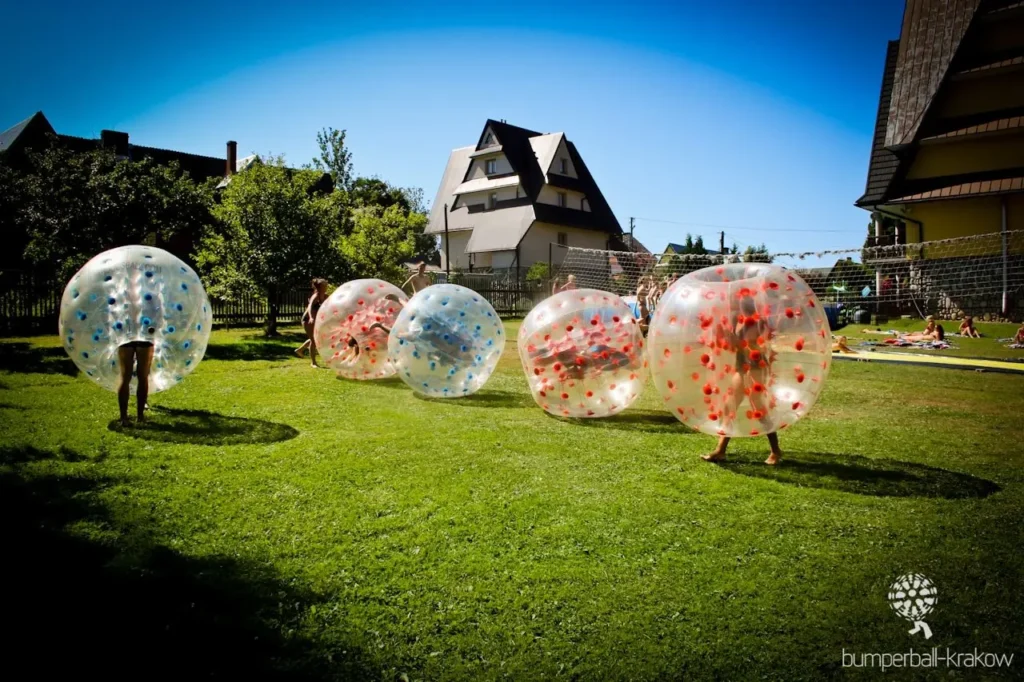
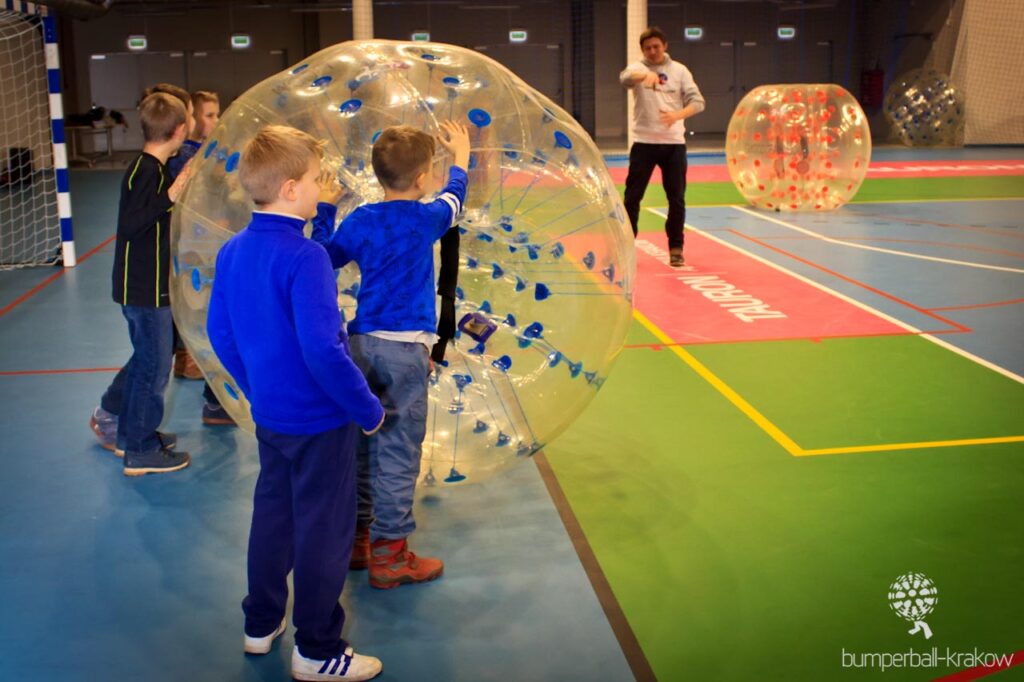
Bubble football, also called bumper ball, is football played inside giant inflatable balls. Each ball goes on like a rucksack – with adjustable straps and two hand grips – and weighs about 10 kg when inflated. It covers you from head to knees with your legs outside, so you can run, kick the ball and bounce off opponents – tumbles matter as much as goals.
The match is only the beginning. We also play Bubble Sumo (pushing your opponent out of a circle), Bubble Bowling (a player charges in and knocks opponents over like skittles), Bulldog, Last Man Standing and rugby. The referee picks games to suit the group and enforces the safety rules, and everyone first gets a briefing on putting the ball on safely.
There are 10–12 players on the pitch at once; we split bigger groups into teams for a mini tournament so everyone plays. A standard booking is 1 hour of balls and venue, with about 45 minutes of actual play, and it can be extended by 30 minutes.
In Krakow we play at the Com Com Zone hall (ul. Ptaszyckiego 6, Nowa Huta) and the hall at al. Jana Pawła II 37, or wherever you choose: a hall, an Orlik pitch (one of Poland’s free public all-weather pitches) or grass. Ball delivery is free within 15 km of Krakow city centre, then €0.23 per kilometre – we travel all over Poland. We have 10 balls 1.5 m in diameter for players from about 150 cm tall and 2 larger 1.7 m balls for those from about 180 cm; the maximum player weight is 100 kg.
Children from age 10 and adults can play, wearing PE kit: shorts or a tracksuit, a T-shirt and trainers. Prices start at €17 per person – see our bubble football in Krakow page for details, and we explain what bubble football is and what a game looks like in a separate guide. One caveat: you play sober, so schedule the game before the party, not after.
Archery tag
Imagine dodgeball or paintball, but with bows and arrows tipped with big foam heads. Players wear protective masks, and a player who is hit is out unless a teammate catches an opponent’s arrow – then they’re back in the game. At the start the arrows lie in the middle of the field, so the first few seconds are a race for ammo.
In Krakow, archery tag is offered by event organisers. It’s a good option for a group that loves team competition but would rather shoot than collide.
Footgolf
It’s a mix of football and golf: you kick a regulation size 5 football into a hole about 50–52 cm across, trying to sink it in as few kicks as possible. The rules in their current form were drawn up in the Netherlands in 2008, and it’s played on golf courses or specially laid-out routes.
Not every city has a footgolf course, so check the nearest one before you set off and ask about booking. It’s a good idea for amateur footballers who’ve grown tired of their local Orlik – precision counts for more than power here.
Curling – an unusual winter sport
A stone gliding over the ice, players sweeping in front of it with brooms – you probably know curling from the Winter Olympics. In previous winters, curling lanes were set up in the underground car park of TAURON Arena Krakow: coaches from a local curling club ran the sessions, and groups could hire a lane exclusively.
Check whether the lanes are running this season before you plan a visit. Curling looks harmless, but after an hour of sweeping, everyone will understand why it’s an Olympic sport.
Zorbing
Zorbing means rolling inside a giant transparent ball – usually down a gentle slope, sometimes on flat ground or on water. The first zorbing site opened in Rotorua, New Zealand.
Zorbing is often confused with bumper ball, but they’re two different activities. In a zorb you’re completely inside and roll along with the ball, whereas in bumper ball the ball covers you from head to knees, your legs stay outside and you play football. We set out the differences in zorbing vs bubble football – how they differ and which to choose.
On your own: all you need is the kit and a patch of ground
Disc golf
It’s golf, but with a flying disc instead of a club and ball, and a metal basket with chains instead of a hole. What counts is the number of throws needed to finish the course, so the winner isn’t the strongest player but the most accurate.
In Krakow you can play for free: Park Lotników, near TAURON Arena, has the 9-hole Lotników DiscGolfPark course, and the UDisc app helps you find your way round. Bring your own discs – one all-round disc each is enough to start. It’s a relaxed but addictive start to the day that kids will enjoy too.
Try a game in inflatable balls
We’ll bring 10–12 balls to a hall, Orlik pitch or grass, show you how to put them on safely and supervise the game. We reply within 24 hours.
Check availabilityPrefer to call? +48 509 196 229 – Sylwester. We reply within 24 hours.
Ringo – a sport invented in Poland
Ringo has Polish roots: it was invented in 1959 by fencer and journalist Włodzimierz Strzyżewski. Players throw a rubber ring about 17 cm across and weighing 160–165 g over a net so that it lands in the opponents’ court. It’s played as singles, doubles and triples, and according to the International Ringo Federation, a game goes to 15 points, scored from the opponents’ mistakes.
For casual play, all you need is a ring and a rope strung between two trees, which is why ringo works in the park, on the beach and at summer camps. It’s also one of the most interesting unusual sports for kids – family triples even have their own category.
Kin-ball
Kin-ball was invented in Quebec in 1986 by Mario Demers, a physical education professor. The ball is about 1.2 m across yet weighs only about 1 kg, and three teams of four play at once. The team with the ball shouts ‘Omnikin!’ and another team’s colour, and that team must catch the ball before it touches the ground.
When the ball is struck, every attacking player must be touching it, so nobody stands on the sidelines. It’s great for PE lessons, summer camps or a birthday party in a sports hall – you just need the special giant ball.
Tchoukball
Tchoukball was created in Switzerland by Hermann Brandt. At each end of the court stands a 1 m² frame with a net, at which you throw a ball similar to a handball. You score when the ball rebounds off the frame and lands on the court outside the forbidden zone without the opponents catching it.
Physical contact is banned and defenders can’t intercept passes, so people of very different fitness levels can play together. In a sports hall, all you need is two frames and a ball.
Weird sports around the world – these need a special trip
While we’re on the subject of weird sports: the world has some even more surprising ones up its sleeve. For these you’d have to leave Poland or summon up plenty of courage.
- Cheese rolling – on Cooper’s Hill in Gloucestershire, England, competitors chase a round of Double Gloucester cheese down a slope of about 180 metres. The winner isn’t whoever catches the cheese but the first to reach the finish line at the bottom.
- Wife carrying – a race in which competitors complete the course carrying their partner. The sport was born in Sonkajärvi, Finland, and despite the name, marital status usually doesn’t matter.
- Chess boxing – 11 alternating rounds of speed chess and boxing. A bout ends in a knockout, checkmate or running out of time on the chess clock, and the first competition was held in Berlin in 2003.
- Sepak takraw – volleyball played with the feet, from Southeast Asia. The rattan or plastic ball is played with the feet, knees, shoulders, chest and head.
Unusual sports for kids – what to choose?
For younger children, sports with light kit and simple rules work best: ringo, kin-ball, disc golf and tchoukball. They bring plenty of movement and laughter, and the rules take a few minutes to explain, so the fun starts almost straight away.
Bubble football is for children aged 10 and over – for younger ones, pick one of the games above. Our standard balls are 1.5 m in diameter and fit players from about 150 cm tall, and a bubble football game works well at birthday parties and school events. If you’re wondering whether your child is ready, read from what age kids can play bubble football.
How to plan a day of unusual sports with your group
Two, or at most three, sports in a day is a sensible limit – any more and the fun turns into a boot camp. A sample plan in Krakow could look like this:
| Time | What you do |
|---|---|
| 10:00–11:30 | Disc golf in Park Lotników – 9 holes, free, bring your own discs |
| 12:00–13:30 | Lunch and a short rest |
| 14:00–15:00 | Bubble football in a hall: a match, Bubble Sumo, Last Man Standing |
| 16:00–17:00 | Ringo in the park for anyone keen – all you need is a ring and a rope |
| Evening | Dinner together and crowning the winners of the day |
A few ground rules make things easier:
- Keep score all day. Award points for each sport and hand the winner a token trophy in the evening – it instantly raises the stakes.
- Bring PE kit and water. Shorts or a tracksuit, a T-shirt and trainers will do for most sports on this list.
- In summer, take the game indoors. We advise against playing in the balls in full midday sun – in hot weather, a hall works better.
- Sport first, party later. In a ball, with a bow or on the ice, you need a clear head, so save the beer for the evening.
- Book ahead. We reply to bubble football enquiries within 24 hours, and the sooner you get in touch, the more dates to choose from.
Want more after a day like that? See our list of 25 ideas for an active day and night out in Krakow with friends – there’s inspiration for both daytime and evening.
Get your group together for bubble football
We play in and around Krakow – in a hall, on an Orlik pitch or on grass. Tell us how big your group is and we’ll pick the games and a date.
Check availabilityPrefer to call? +48 509 196 229 – Sylwester. We reply within 24 hours.
Frequently asked questions
What weird sports can you try in Poland?
The ones usually seen as the weirdest have the most eye-catching kit: football in 1.5 m inflatable balls, archery tag with foam-tipped arrows or kin-ball with its 1.2 m ball. Ringo is a curiosity too – a sport born in Poland.
What unusual sport is best for kids under 10?
Ringo, kin-ball or disc golf – the kit is light and children pick up the rules in a few minutes. Save bubble football for when they turn 10.
Do you need to be fit to play bubble football?
No – basic fitness is enough, because the referee picks games to suit the group. You will feel every muscle afterwards, though, as running in a 10 kg ball is a serious workout.
What unusual sports can you do in winter?
In winter, curling and indoor sports work best: bubble football in a hall, or kin-ball and tchoukball in a sports hall. Disc golf and footgolf are more fun in the warmer months.
How many people do you need for bubble football?
We bring 10–12 balls to a game, so it works best when that many people play at once. Bigger groups can play too – teams then take turns on the pitch in a mini tournament.