What is team building? Planned activities that help a team work together better: smoother communication, more trust and clear roles. A company party has a different aim – celebrating and relaxing – though you can combine both in one day.
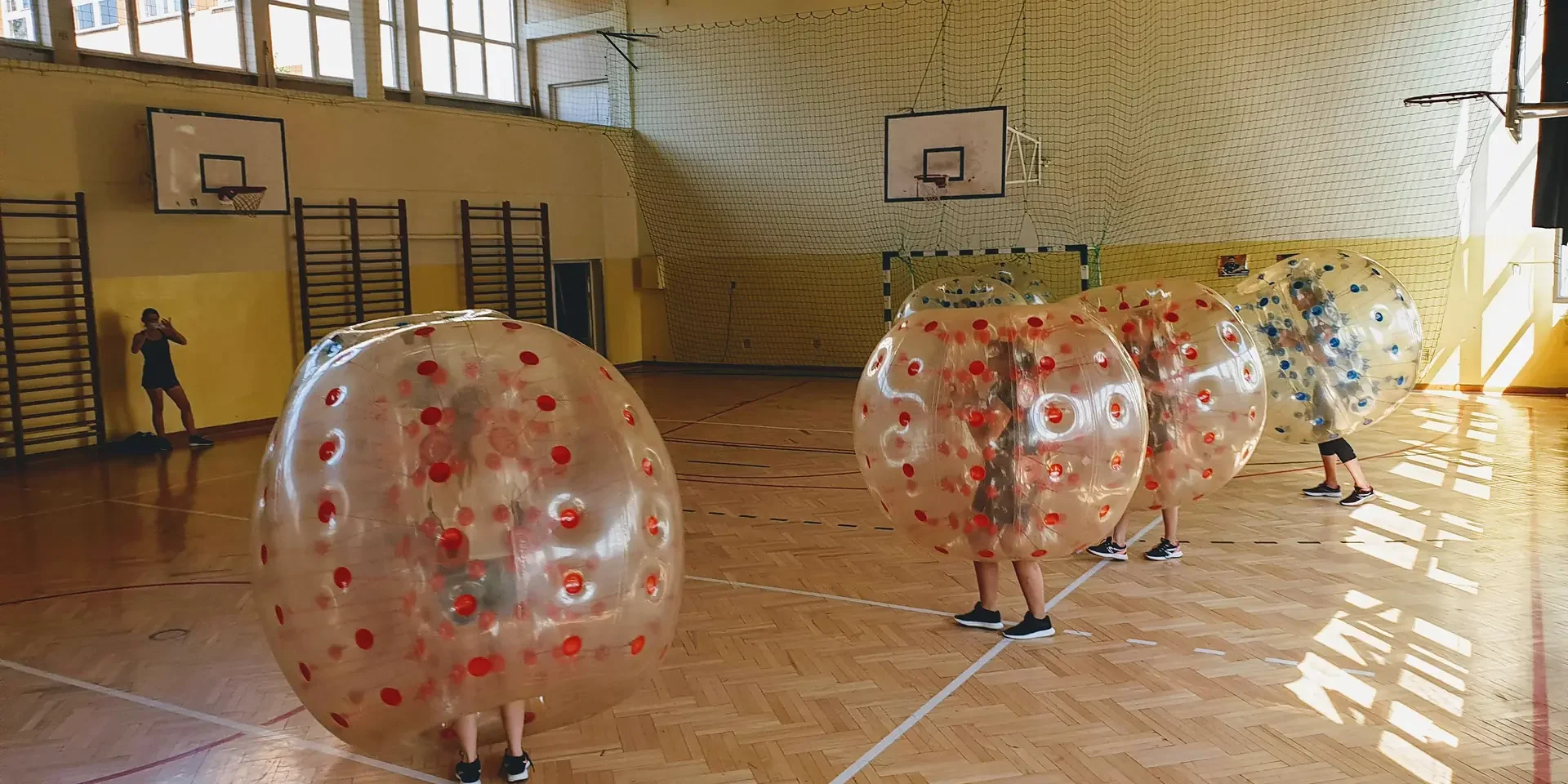
In practice, two things make the difference: a goal set before the event and a short debrief after it. The same bubble football match can be pure entertainment or fully fledged team building – it all depends on how you plan it.
What is team building in practice?
Companies use the term for everything from trainer-led workshops to an escape room or a sports day. The common thread: a task the group can only complete together, followed by a talk about how it went.
Good team building answers a specific need: people in a new team don’t know each other yet, two departments can’t get along, or relationships need rebuilding after a tough project. Simply want a good time together? That’s a great reason too – but then it’s more of a team social (what Poles call integracja) than team building.
Where does it come from, and does it work?
Bruce Tuckman’s often-cited 1965 model describes the stages of group development: forming, storming, norming and performing. In 1977 he added a fifth stage – adjourning, when the collaboration ends (EBSCO Research Starters). Well-planned team building can help a team get through the storming stage faster.
In practice: at the forming stage, getting-to-know-you games work well; during storming, tasks requiring joint decisions plus an honest debrief; during norming, work on the rules of collaboration; and a well-oiled team gains most from challenges and healthy competition.
Does it work? A 2009 meta-analysis in the journal Small Group Research (Klein et al.) found a moderate positive effect of team building on all the team outcomes studied. The strongest effects were on attitudes and emotions and on processes – that is, how people work together (Small Group Research, 2009). In other words, it’s not magic, but it’s not a waste of time either.
Types of team building
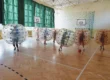
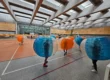
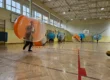
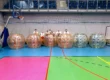
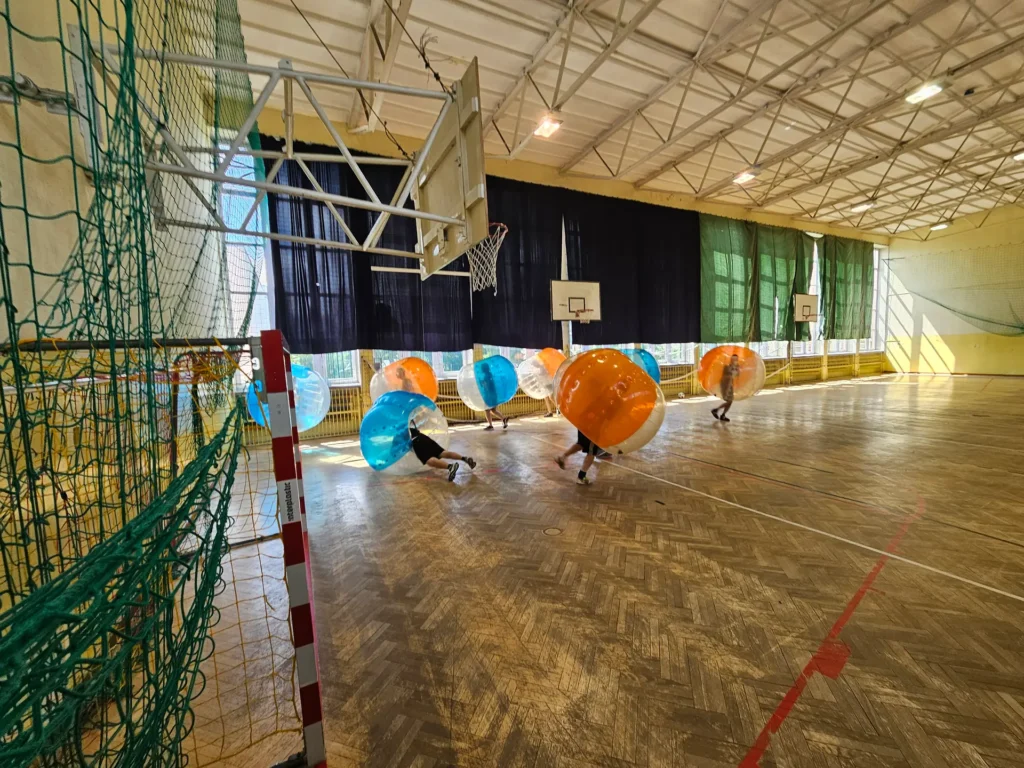
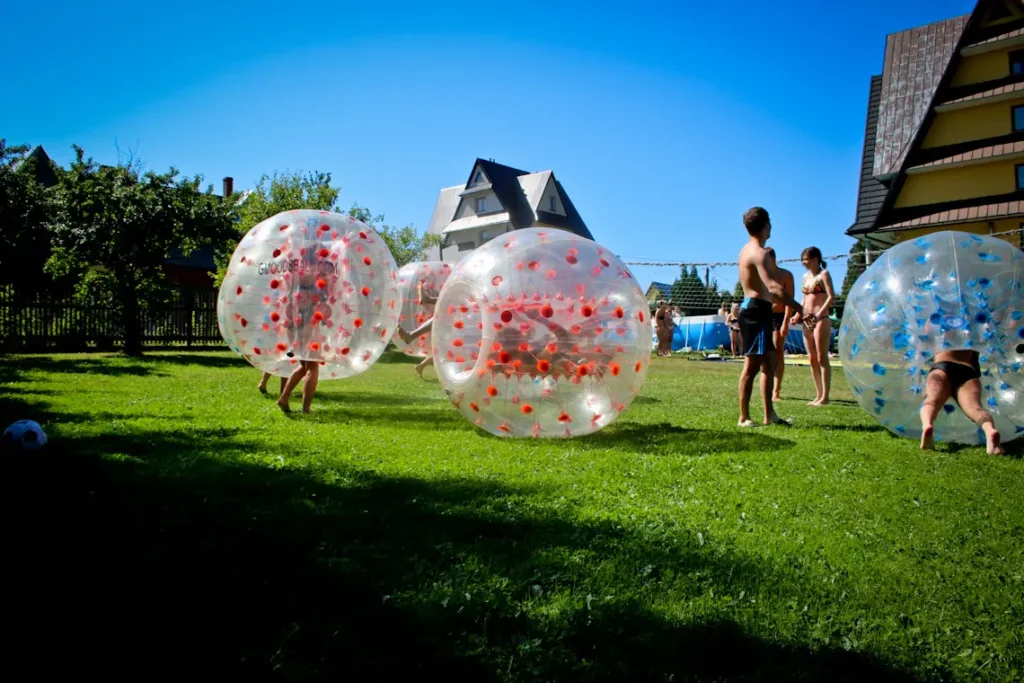
- Active and sporty – a sports day, games on the pitch, a bubble football match. It quickly releases tension and flattens the hierarchy: in an inflatable bubble, the CEO looks exactly like the intern.
- Task-based – an escape room, puzzles, the spaghetti tower. It shows how the team plans and shares information.
- Creative – cooking or art workshops. Good for teams that have had enough of competition.
- Trainer-led – work on goals, roles and communication. It’s closest to a development workshop.
- Outdoor – field games, hare and hounds, tasks in a forest or park.
- Social – volunteering: the team does something for others and learns to cooperate along the way.
- Remote – quizzes and games on a video call for distributed teams.
Team building vs a company party – what’s the difference?
| Feature | Team building | Company party |
|---|---|---|
| Aim | better cooperation, communication, clear roles | celebration, relaxation, reward |
| Format | tasks that require working together | dinner, music, casual conversation |
| Who runs it | a trainer, activity host or referee | often nobody |
| Timing | often during working hours | usually in the evening |
| Result | lessons you can take back to work | shared memories and more relaxed relationships |
| Alcohol | not during the tasks | often part of the programme |
Combining the two works best: first the task-based or sporty part, then a meal together. People have something to talk about at the table, and the alcohol only comes out once the bubbles are packed away.
Team building in inflatable bubbles
A match, a mini tournament and games chosen to suit your group – in a sports hall in Krakow or at your venue. We reply within 24 hours.
Check availabilityPrefer to call? +48 509 196 229 – Sylwester. We reply within 24 hours.
Team building games and examples
- Two truths and a lie – for a new team to get acquainted.
- Spaghetti and marshmallow tower – about planning and testing ideas.
- Minefield – about precise communication and trust.
- Escape room – about sharing information under time pressure.
- Bubble football match – about tactics, team roles and cheering each other on.
The full rules of 15 games – for the office, outdoors and the pitch – are in our article team building games for adults: 15 ideas for the office and the pitch.
A bubble football match as an example of team building
Take a bumper ball match. 10–12 people play at once, so a bigger group splits into teams and plays a mini tournament. The referee picks games to suit the group: besides the match, there’s Bubble Sumo, Bulldog and Last Man Standing, among others. An hour’s ball hire gives you about 45 minutes of actual play.
To turn a good time into team building, add three things:
- A goal before the game – e.g. every team mixes people from different departments, and the captain is someone who doesn’t manage anyone day to day.
- A huddle between rounds – two minutes for tactics: who defends, who attacks, how you play when the other side is ahead.
- A post-match debrief – ten minutes over water: what worked, who took the lead, what you’re taking back to work.
Practical details are on our page about bumper ball matches for corporate team building in Krakow.
How do you run a team building debrief?
A debrief doesn’t have to feel like a meeting. All you need is 10–15 minutes in a circle and four questions:
- What actually happened? Everyone says one sentence.
- What worked, and why?
- What slowed us down or annoyed us?
- What one specific thing are we taking into our everyday work?
The facilitator makes sure the conversation is about behaviour, not judging people. Note the answers to the last question and revisit them in a month.
Team bonding at work – how to choose the right team building
- Group size. Up to 12 people, one shared activity is enough; with 20–40, a tournament or several teams; with 50 or more, zones with rotation.
- Your team’s stage. A new team needs getting-to-know-you games, a team after a conflict is better served by a trainer-led workshop, and a close-knit team wants competition and a prize.
- Fitness and health. Choose formats where everyone can find a role – including as referee, supporter or photographer.
- Personalities. Introverts find tasks in small groups easier than performing in front of the whole company.
- Time and budget. Team building during working hours makes it clear it’s part of the job, not an after-hours extra.
We’ve set out the whole process – from the goal and the survey to the wrap-up – in our step-by-step plan for organising a team building event.
When doesn’t team building work?
- When it’s forced fun. Pressure kills the atmosphere faster than rain.
- When the tasks make people look silly. For many people, a solo performance in front of the whole company is stress, not bonding.
- When there’s no debrief. Without a conversation afterwards, you’re left with a nice memory but little changes at work.
- When it’s meant to replace fixing a problem. If a conflict comes from, say, an unclear division of responsibilities, a match alone won’t solve it – you also need to talk about roles.
- When it starts with alcohol. The task-based and sporty part always comes before the toasts.
Play together, then talk it over
We’ll bring the balls and run the match and the games, and you take care of the debrief. We issue VAT invoices to companies.
Get a quotePrefer to call? +48 509 196 229 – Sylwester. We reply within 24 hours.
Frequently asked questions
What is team building called in Polish?
Poles usually say budowanie zespołu (literally “team building”) or simply integracja, although the second word is broader and also covers ordinary company parties.
How long does team building take?
Anything from 30 minutes of games in the office to a full day or a trip away. To start with, 2–3 hours is enough: a shared activity, a debrief and a meal.
What’s the difference between team building and training?
Training passes on knowledge or skills, while team building focuses on relationships and cooperation within a specific team. A trainer-led workshop can combine both.
Is bubble football suitable for a team with mixed fitness levels?
Yes – you don’t need to be sporty, and we tailor the games to what the group can do. There are just two limits: a height of about 150 cm or more and a weight of up to 100 kg.