Wondering how to organise a team building event people attend willingly, not out of duty? Start with the goal and budget, then ask the team, and only then choose the activity and sort the logistics. Below: a 9-step plan, a preparation timeline and a sample afternoon programme.
We write as organisers: we’ve run Bumper Ball games in Krakow for years, for companies too. But the plan works whether you choose bubble football, a workshop or a Vistula cruise – and shows how to organise a company event without a last-week panic.
How to organise a team building event in 9 steps
Step 1. Define the goal
Getting a new team acquainted, celebrating a finished project, bringing together departments that normally only swap emails – each goal calls for a different format. Write the goal in one sentence and show it to whoever approves the budget. It’ll spare you later debates along the lines of “maybe go-karting after all?”
Examples: a new team needs getting-to-know-you games and a shared activity; after a tough project, something laid-back works better; and to bring departments together, mixed teams that pair someone from accounts with someone from IT.
Step 2. Set a budget per person
Set an amount per participant and split it into activity, food and drink, transport and a 10% contingency. For comparison, our bubble football is €17 per person without a hall, €22 with a hall and €28 in the VIP package with a game host, referee and souvenir photos. For 30 people, a match with a hall comes to 30 × €22 = €660 – plus food and any transport. Agree with accounts straight away whether the budget is net or gross (excluding or including VAT). Calculations for 20, 50 and 100 people are in our article on how much a corporate event costs in Krakow.
Step 3. Choose the date and time
If turnout matters, consider working hours – then nobody has to choose between the event and private plans. Check holidays, the quarter-end close and key project deadlines. In summer, avoid the midday sun; a hall works better then, as it does in winter.
Step 4. Run a short survey
Three to five questions are enough, for example:
- Which of the proposed dates suits you?
- Do you prefer an active, calmer or mixed programme?
- Do you have any dietary requirements or allergies?
- Would you prefer an evening with or without alcohol?
- What would make it easier for you to take part?
An anonymous survey lets people admit honestly that they can’t stand karaoke. Allow a few days for answers and send one reminder.
Step 5. Match the activity to your people, not to trends
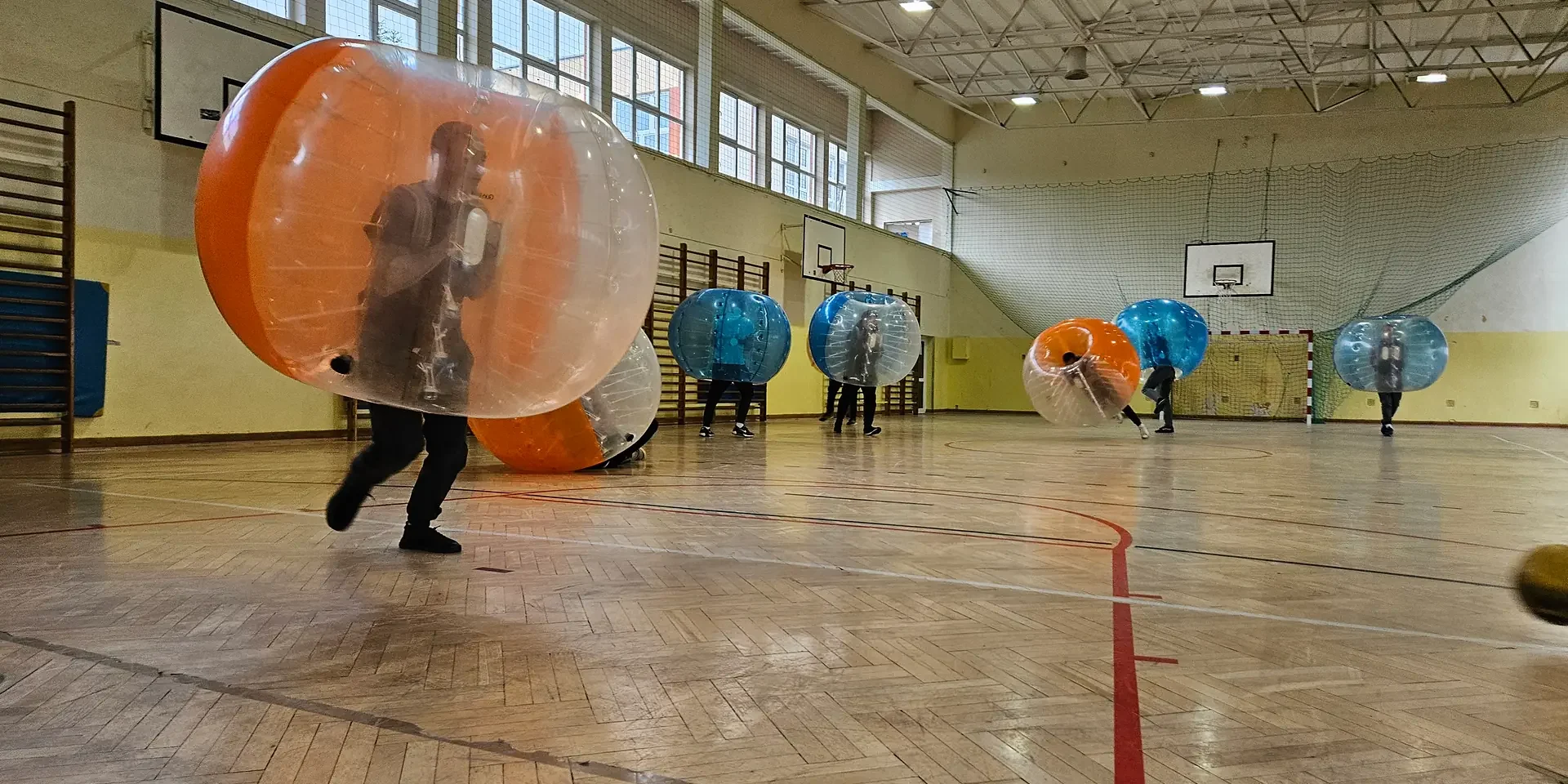
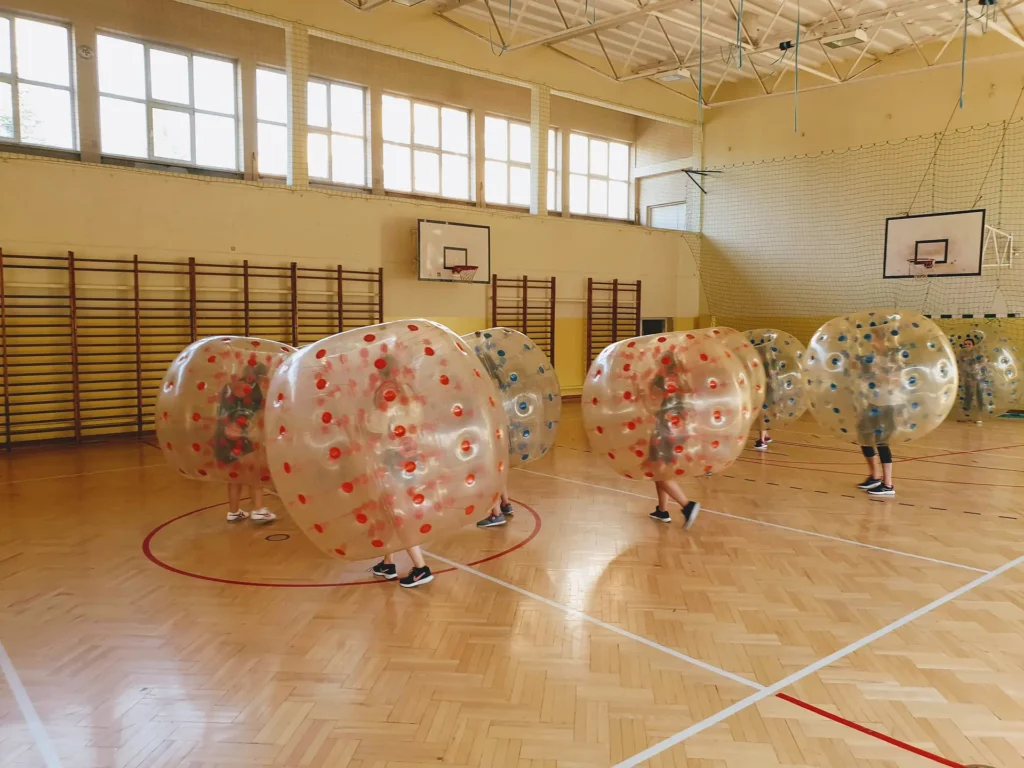
Mixing an active part with a calmer one works best, e.g. a match and dinner, or a workshop and a quiz. Also check how many can take part at once: bubble football has 10–12 players on the pitch, so larger groups play a mini tournament. For inspiration, see our 20 team building ideas in Krakow.
Plan roles for those who can’t or won’t play: supporter, photographer, scorekeeper. Then nobody stands on the sidelines with a coffee and an “I’ll just watch” face. Mix teams across departments too – otherwise only people who already sit desk to desk will bond.
Step 6. Plan the logistics
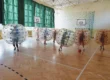
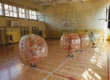
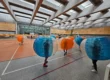
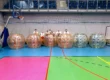
Venue, travel, food and a timed plan for the day – these four should fit on one sheet of paper. If you choose bubble football, we play at the Com Com Zone hall (ul. Ptaszyckiego 6, Nowa Huta) and the hall at al. Jana Pawła II 37, or at a venue of your choice. Delivery of the balls is free within 15 km of Krakow city centre, and if you don’t have a venue, we’ll find and book a hall.
For out-of-town guests, we also help with the rest of the day: transport from the hotel and back, a restaurant table or an evening on the Boat Party boat. Details of a company match are on our page about bubble football for team building events in Krakow.
Appoint one contact person on your side and ask every supplier for one too. On the day, it’ll spare you a dozen “where’s the entrance?” phone calls.
Leave the active part of your event to us
We’ll bring the balls, run a match or mini tournament and help you find a hall in Krakow. We reply within 24 hours.
Ask about datesPrefer to call? +48 509 196 229 – Sylwester. We reply within 24 hours.
Step 7. Communicate clearly and early
Send the invitation 3–4 weeks ahead: date, times, venue, how to get there, programme and dress code. For an active event, say plainly what to wear – for bubble football, shorts or a tracksuit, a T-shirt and trainers will do. A day or two before, send a reminder with the schedule and the contact person’s number.
Step 8. Take care of safety
Ask each supplier what the safety briefing involves and who supervises the activity. With us, a briefing on putting the ball on safely comes before the game, and our organiser supervises play (in the VIP package, a game host and referee too). The balls are for people from about 150 cm tall, and the maximum player weight is 100 kg – check this before sending invitations.
Schedule the active part before any alcohol, not after. Have water and a first-aid kit ready, and appoint someone who knows the venue’s exact address and can call for help if needed.
Step 9. Wrap up and gather feedback
Within a week, send a short survey with three questions: a 1–5 rating, what was best and what to change next time. Share the photos – you can add photo coverage of the match (20–25 photos plus a group photo) for €34. Note the lessons in one document, and next time you’ll start with a ready-made plan.
Timeline: organising a team building event week by week
| When | What to do |
|---|---|
| 8 weeks before | goal, budget, provisional dates, management sign-off |
| 6 weeks before | team survey |
| 4–5 weeks before | choose the activity, book the venue and suppliers |
| 3–4 weeks before | invitation with the programme and dress code |
| 1 week before | confirm numbers, diets and transport |
| 1–2 days before | reminder and plan for the day |
| 1 week after | survey, photos, thank-yous, lessons learned |
Sample afternoon programme with bubble football
- 15:30 – leave the office
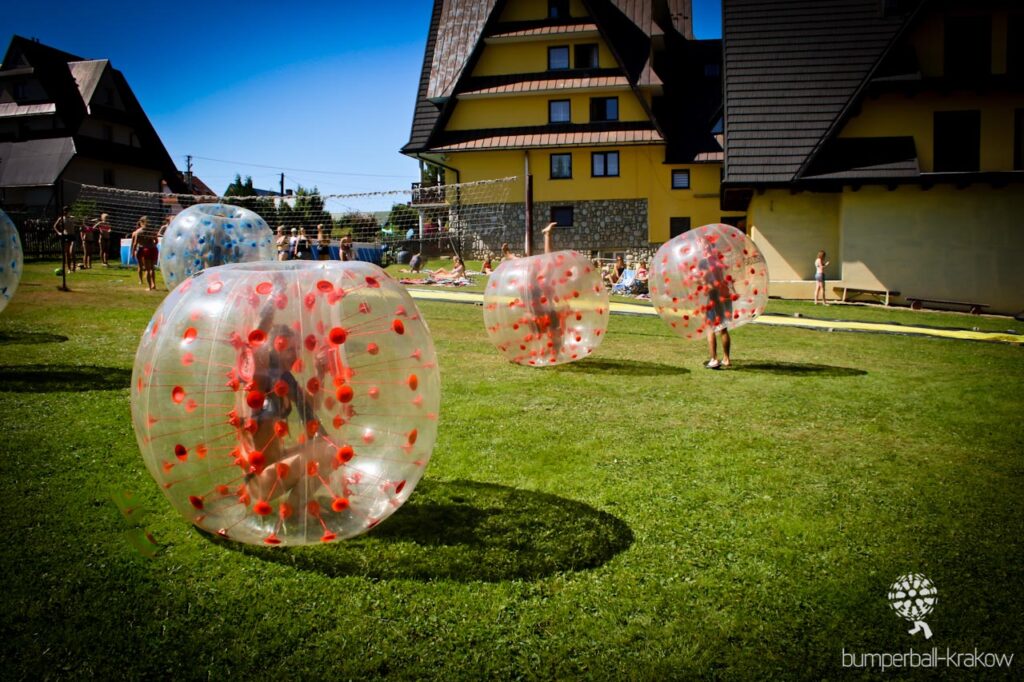
- 16:00–17:00 – an hour with the balls: briefing and about 45 minutes of actual play (match, Bubble Sumo, Last Man Standing)
- 17:15 – group photo and getting changed
- 18:00 – dinner at a restaurant
With more than 12 people we play a mini tournament, and if you want more playing time, the standard hour can be extended by 30 minutes.
The most common team building mistakes
- Alcohol instead of a programme. Without a shared activity, people sit in the same little groups as at the office.
- An activity that doesn’t fit the headcount. If 10–12 people can play at once and 40 turn up, you need a tournament or rotation between zones.
- No bad-weather plan B. For an activity on grass, decide early where the game moves if it pours.
- A programme with no breaks. People need time for water, a chat and getting changed, so leave 15 minutes between items.
- No follow-up. Without a post-event survey, you’ll start from scratch next time.
Paperwork: VAT invoices and tax
We issue VAT invoices to companies and institutions. Before ordering, confirm the invoice details and the budget line with your accounts team.
The second issue is employees’ personal income tax (PIT) under Polish rules. In its judgment of 8 July 2014 (case K 7/13), Poland’s Constitutional Tribunal held that a free benefit counts as an employee’s income if they took it up voluntarily, in their own interest, and the benefit is measurable and attributable to a specific person. For an event open to the whole team, the last condition is usually not met (analysis on Infor.pl, in Polish), but leave the final assessment to your accountants.
Book a match for your team
Tell us your headcount and date, and we’ll suggest a game format, a hall and an hour-by-hour plan. We issue VAT invoices.
Check availabilityPrefer to call? +48 509 196 229 – Sylwester. We reply within 24 hours.
Frequently asked questions
How far in advance should you start organising a team building event?
For several dozen people, ideally 6–8 weeks before the planned date. An event for one department with a flexible date can be prepared in 2–3 weeks.
How do you get employees to take part in team building?
Ask for people’s views before choosing the activity, and show a concrete programme, not a vague “it’ll be fun”. It also helps to make clear that the active part is voluntary.
Do you need to be fit to play bubble football?
You don’t need to be an athlete. An inflated ball weighs about 10 kg and you put it on like a rucksack, and we tailor the games to the group.
What if it rains on the day of the event?
The simplest solution is an indoor activity from the start. If you’re thinking of bubble football on grass, agree an indoor option with us in advance – we work with venues all over Krakow.